
Riley County Owner Record Card
Beacon is Riley County's main parcel search today. The Appraiser's parcel systems tie the owner of record to the parcel itself, not just a typed name. A public GIS layer confirms the underlying fields. For the fuller assessment record, pull the property record card and read the name beside the legal description and parcel key.
| Owner Name | Party_Name or the owner shown on the current parcel card |
|---|---|
| Mailing Address | Party_Addr plus city, state, and ZIP for record mail |
| Situs | Property_A, the address assigned to the land |
| Parcel Keys | PID, ParcelNum, QuickRefID, PropertyID, and map number |
| Land Match | Subdivision, legal description, stated area, and taxing unit |
| Deed Clue | Sales record indicator and book/page where present |
The current owner field never names the occupant. The situs address does not prove where the owner gets mail either. Keep those columns separate. The Treasurer may send an original tax bill to a mortgage company and a duplicate to the taxpayer, with delinquent notice going to the owner, yet none of that mail changes recorded title.
Riley County's New Owner Portal
Beacon replaced the county's former parcel search on December 1, 2025. The launch notice promises expanded search options. It also lists value and assessment detail, printable property cards, an interactive GIS and aerial view, tax distribution, and limited-period comparable reports. Pick your entry point. Use an address for a known site. Try an owner name when the address is unknown. A parcel or reference ID from a deed, tax bill, or plat map works best of all. County GIS remains a separate official tool, with ownership parcels updated daily. A map refresh is not deed confirmation.
Inspect Riley County Owner Fields
The parcel-layer metadata lists owner fields and aliases.
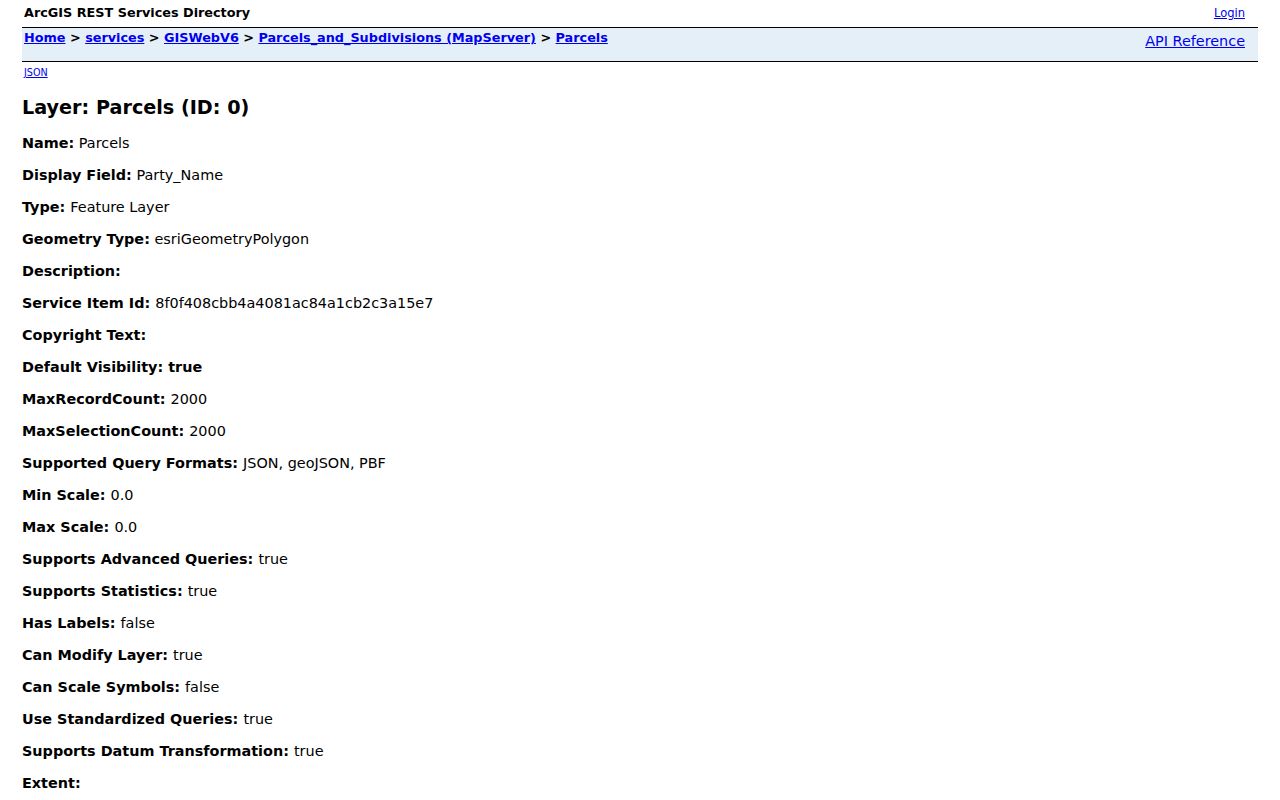
Party_Name, Property_A, and Party_Addr stay distinct fields. A PID and legal description anchor all of them to one parcel.
Confirm Riley County's Current Owner
An owner display carries the most weight when it matches the newest deed for the same land. The Riley County Register of Deeds maintains the recorded ownership indices, iDocMarket subscription access, and courthouse public terminals. Staff help with a basic owner or address lookup. They cannot certify clear title.
- Read the owner of record and mailing address on Beacon or the parcel card. Copy the parcel ID and full legal description.
- Search the recorder index for the newest deed whose grantee and land description fit that parcel.
- Compare the deed's recording date, grantee, legal description, and book/page with the current card.
- When the grantee is a formal entity, check the exact name in the Kansas business search for entity context.
- Owner of record
- The party presently shown on the official property record.
- Assessment roll
- The appraiser's parcel and value record used in property administration.
- Situs address
- The assigned property location, distinct from the owner's mailing address.
- Recording lag
- The short time between recording a document and its entry or scan appearing in another system.
Recent Riley County Owner Changes
A qualified document is generally recorded the same day, the recorder says. Computer entry and scanning take another day or two. Most originals go back to the submitter afterward. A digital copy stays on file. That timing leaves a narrow but real gap where a signed or newly recorded deed may not yet show on the public parcel card.
Newest record wins the timing check. When the roll lags a recent sale, verify the newest recorded deed and its matching legal description with the custodian.
A sale contract is not ownership. Neither is a winning auction bid. Riley County tax-sale rules make a bidder owner only after court confirmation and the deed process, and probate, divorce, foreclosure, or quiet-title orders can sit behind other changes. Test the current field against the recorded land trail.
Read Riley County Entity Owners
LLC, trust, and estate names deserve a literal read. Never swap in a registered agent. Never assume a trustee owns the land personally, either. A Kansas entity record can confirm a formal business name and registered office, but it is not the deed, and its office address is not the parcel situs.
Trust and estate questions may still need the deed or a related court file. Keep every suffix, comma, and name variant while searching. A broad name match proves little. The current owner's name earns meaning from the deed language and the land description itself.
Request Riley County's Owner Card
When Beacon falls short, the Appraiser's property record card form is a direct backup. It asks for the property address, delivery choice, and email. Daytime phone is needed too. The requester's contact details round out the form. Owners pay nothing. Pickup costs non-owners 25 cents per page. Mail adds postage, local fax costs $1.25 per page, and long-distance fax runs $2.25.
The Appraiser sits at 110 Courthouse Plaza. Call 785-537-6310. Hours run Monday through Thursday, 7:30 a.m. to 5 p.m. Friday hours are 7:30 a.m. to noon. A narrow Kansas Open Records Act request remains another documented channel. Try it when the card process fails to supply the record.
Use Riley County Owner Data Lawfully
The owner mailing field is a record address. It grants no license for intrusive contact. Kansas Safe at Home supplies substitute addresses for eligible survivors, and K.S.A. 45-221 lets some protected public-official home addresses stay withheld. Do not lean on another database to defeat those protections. Do not infer a private residence from a gap.
A parcel card supports a purchase inquiry, deed correction, tax matter, boundary question, or estate task. The card cannot prove occupancy. It cannot certify title either, and the fuller address-to-deed method appears in who owns a Riley County property.
Respect protected addresses. Use Riley County current owner records for lawful property research. Never use the name or mailing field to target or harass anyone.
Riley County keeps most parcel and assessment records open to the public. Still, some material sits behind legal limits. Commercial income and expense questionnaires stay confidential under K.S.A. 45-221(b). Beacon's launch notice mentions public comparable-sale reports for a limited period after valuation notices go out. Separate statutory subscriber access may govern sales data. These restrictions do not hide the ordinary owner-of-record field. They simply explain why a parcel card cannot show every fact behind an appraisal.
Corrections begin with the office that keeps the field. Hand the Appraiser the parcel number and the exact owner or address entry that looks wrong. A newly recorded instrument may have caused the problem. In that case, give its recorder citation instead of asking GIS to settle a title question. Under the Kansas Open Records Act, an agency generally must respond within three business days. It may grant access, deny it, or explain a delay, with lawful exemptions and reasonable fees applying. A records request retrieves an existing record. It is not a title opinion, and it cannot force the county to settle a private dispute.
The Riley County KORA form accepts U.S. mail, priority mail, fax, and pickup. It asks for a detailed description of the record, your intended use, contact details, a signature, and the date. The form also includes a certification. Name and address lists will not be used to sell or offer property or services. For a current owner question, request the smallest useful record. That might be a named parcel card or a single instrument, and the office can apply any lawful redaction.