
Identify a Riley County Owner
Two records do two different jobs here. First, Riley County Community GIS or Beacon ties the address to a parcel. It shows Party_Name, the current owner field. That name is only a lead. The Register of Deeds then confirms the conveyance itself. It lists the grantee, legal description, recording date, and book/page. Trusting a name copied off a single map is far weaker than running both checks.
- Search the address in county GIS or the Riley County Appraiser's Beacon system. Select the polygon and copy its parcel key, legal description, and displayed party.
- Carry that exact name and land description to the Riley County Register of Deeds. Find the newest deed that conveyed the same land.
- Compare the deed's grantee with the parcel owner. A just-recorded deed may be newer than the public card or map.
- If the grantee is an entity, search its exact legal name through the Kansas Secretary of State. Treat a registered office as an entity contact, not the property's address.
This flow answers ownership through the county's own record trail. It does not establish clear title. Nor does it reveal whether the named owner actually occupies the site.
Riley County Owner Display Fields
The county parcel service splits its display fields deliberately. Party_Name is the owner lead. Property_A is the property or situs address, and Party_Addr is the mailing destination tied to the party. City, state, and ZIP fields round out the context. None of them, alone, should be read as proof of who lives at the parcel.
Match fields matter just as much. PID, ParcelNum, QuickRefID, subdivision, legal description, taxing unit, and book/page all pin a record to one tract. When a common name shows up on several parcels, compare those keys before drawing any conclusion. A different property address and owner mailing address is routine. It reflects off-site ownership or where the tax bill goes.
See Riley County Ownership Fields
The official Riley County parcel-layer page publishes the field aliases behind the public map service.
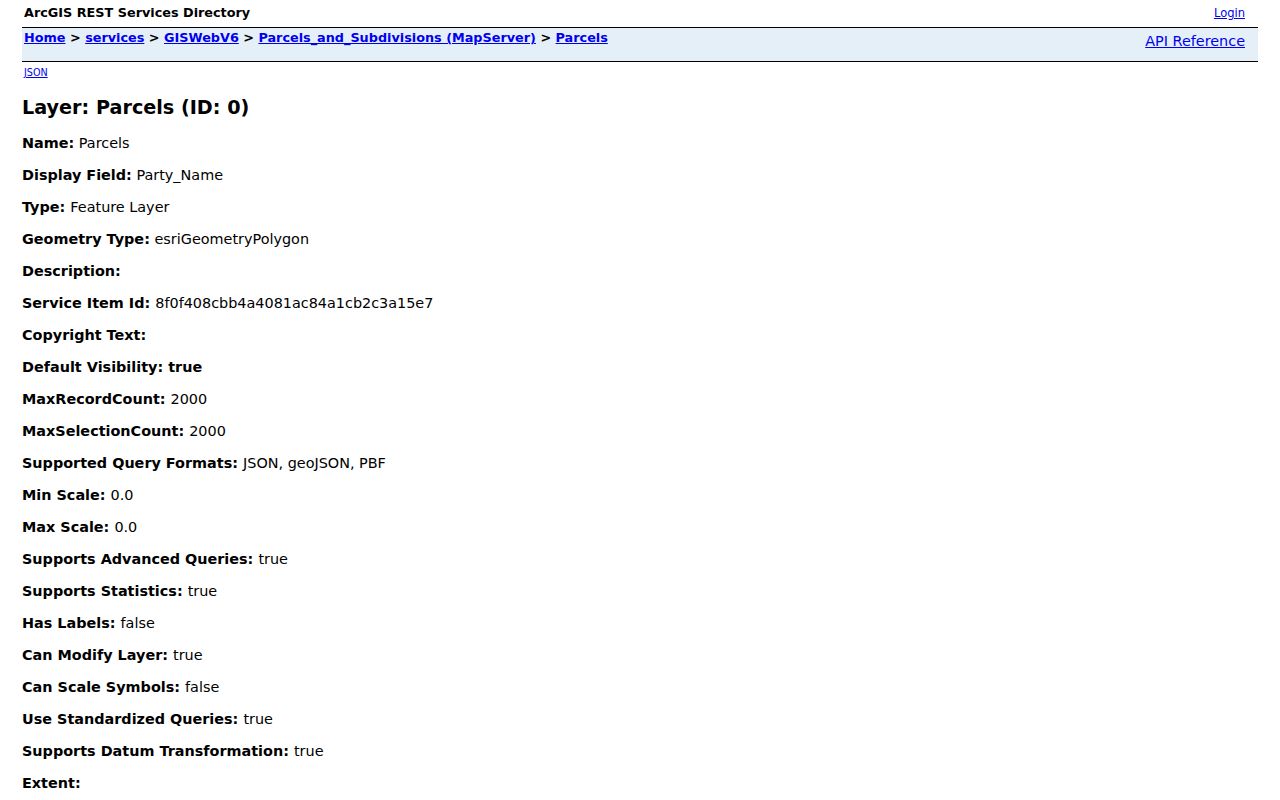
That field list carries a lesson. An owner lookup should hold onto both identity and parcel keys. Party_Name alone is just a lead; legal description, PID, and book/page keep it tied to the right tract.
Riley County Ownership Sources
Each official source answers a narrower slice of the ownership question. The Appraiser and the GIS map deliver the quick current display. The recorder holds the recorded conveyance. When a name cannot be read as an individual, entity records help. Court records explain the rest.
| Where ownership appears | What it contributes | How current |
|---|---|---|
| Appraiser / Beacon | Owner of record, parcel card, mailing and situs detail | Current roll, subject to processing lag |
| Community GIS | Party_Name tied to the selected polygon and identifiers | Ownership parcels are described as daily updates |
| Register of Deeds | Latest grantee, legal description, book/page, recorded image | New document recording, then entry and scan |
| Kansas entity search | Formal entity record and registered office | Entity context, not proof of land title |
The Treasurer takes owner name, Taxpayer ID, CAMA ID, or address for a tax account. But taxpayer, mortgage escrow recipient, occupant, and owner of record are not the same thing. For recorded ownership, the deed controls.
Confirm Who Owns in Riley County
The recorder reports that every county parcel is listed in the computer. Each listing carries a current owner of record. Staff handle a basic lookup by owner or address, and public terminals support deeper digging. Remote iDocMarket subscription access reaches land records back to 1853. The smart method is to search the displayed owner as grantee. Then compare the newest relevant deed with the parcel's legal description and book/page clue.
Recording itself usually happens the same day. Computer entry and scanning can lag another one or two days. That small gap matters after a closing. Do the parcel card and the deed disagree? Ask the recorder whether a new instrument awaits indexing. The office sits at 110 Courthouse Plaza, second floor, Room B202, reachable at 785-537-6340. Friday doors lock at noon, so call ahead before a late-week trip.
Riley County Entity Owners
Sometimes the display names an LLC, trust, estate, or other entity rather than a person. Copy that name exactly, punctuation and suffixes included, when moving between systems. Kansas business records can supply formal status and a registered office for corporations and LLCs, though general partnerships and sole proprietorships do not all appear there. And a registered agent is not automatically a beneficial owner.
- Owner of record
- The party shown by the current public property record.
- Grantee
- The party receiving an interest in a recorded deed.
- Title
- The legal rights in land, which a simple owner display does not certify.
- Situs address
- The location assigned to the property, distinct from the owner's mailing address.
Estate, divorce, foreclosure, or quiet-title matters can also explain a change of name. Search the deed first. Reach for Riley County District Court or Kansas CaseSearch only when the recorded trail points to a court event.
Riley County Owner Changes
An auction result or tax account can look like an answer. A probate clue can too. But the legal step is not finished yet. Under Riley County's tax-sale rules, the bidder is not the owner until court confirmation and a deed follow. A death alone does not update ownership either. The deed wording, court order, probate transfer, or other qualified instrument must actually connect to the land record.
For present-tense detail, the Riley County current owner record is the right tool. Prior names take a backward deed chain. Never rely on a guess built on archived directories or news.
Limits on Riley County Owner Lookups
Asking who owns this property is really asking about a legal record, not a resident. An assessor or GIS name cannot show every beneficial interest. It cannot resolve a boundary or clear liens. It also cannot prove the owner lives in the building. The Register of Deeds records qualified instruments but cannot certify clear title. For a purchase or a dispute, qualified title work and legal help may be needed.
Kansas also shields some address information. K.S.A. 45-221 lets certain protected public-official address data be withheld. Safe at Home offers a substitute-address program for eligible survivors. A substitute or missing address is not an invitation to reconstruct the private location. Do not rebuild the private location from other public systems.
Lawful use. Riley County owner records may support a purchase, boundary question, estate matter, or civic research. Never use them to target, stalk, or harass a person.
An online dead end does not close the door on a Riley County owner search. The Appraiser takes web requests for a property record card. Its form lets you choose pickup, mail, email, or fax delivery. The Register of Deeds keeps public terminals at the courthouse. Staff can do basic searching by owner name or address. iDocMarket runs on subscriptions. You never have to buy in, though. A portal can fall short. A narrow written KORA request can then describe the existing record you need.
The request form asks for the property address and your delivery choice. It also wants an email, a phone number, and contact details. Owners pay nothing. The published fee schedule for everyone else lists 25 cents per page for pickup. Mail runs 25 cents per page plus postage. A local fax costs $1.25 per page, and a long-distance fax runs $2.25 per page. Call the Appraiser at 785-537-6310, and note that public hours run only through noon on Friday. Those channels keep a Riley County property records lookup alive even when a map session fails.
Give every fallback request a stable key. A rural tract or a parcel-assigned address can defeat a street address alone. Add the parcel ID, the legal description, the subdivision, or the S-T-R. Include an approximate recording date when you have one. For deeper digging, the recorder's published rate is $20 per hour in quarter-hour increments. A plain instrument copy runs $1 per page, and certification adds $13 per document. Confirm current charges with the office before you order.